Choose the scale and silhouette
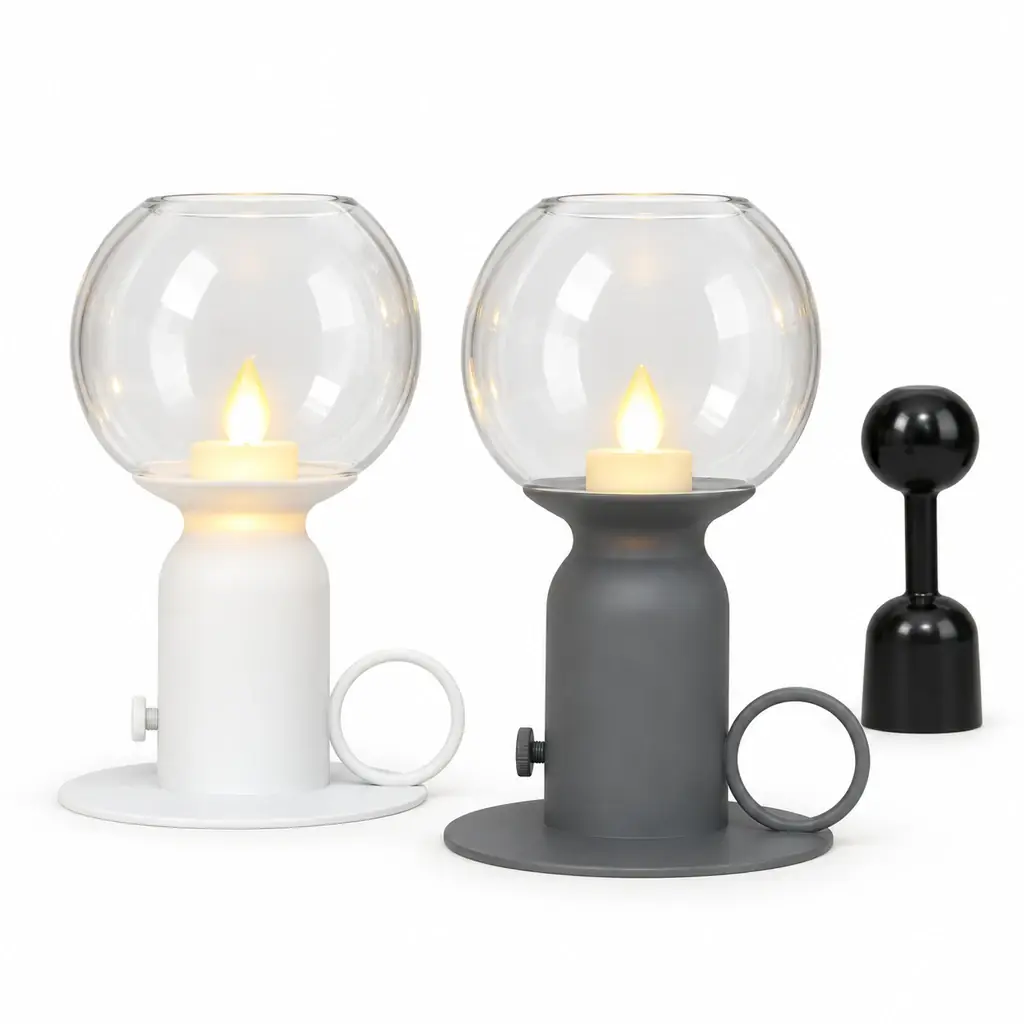
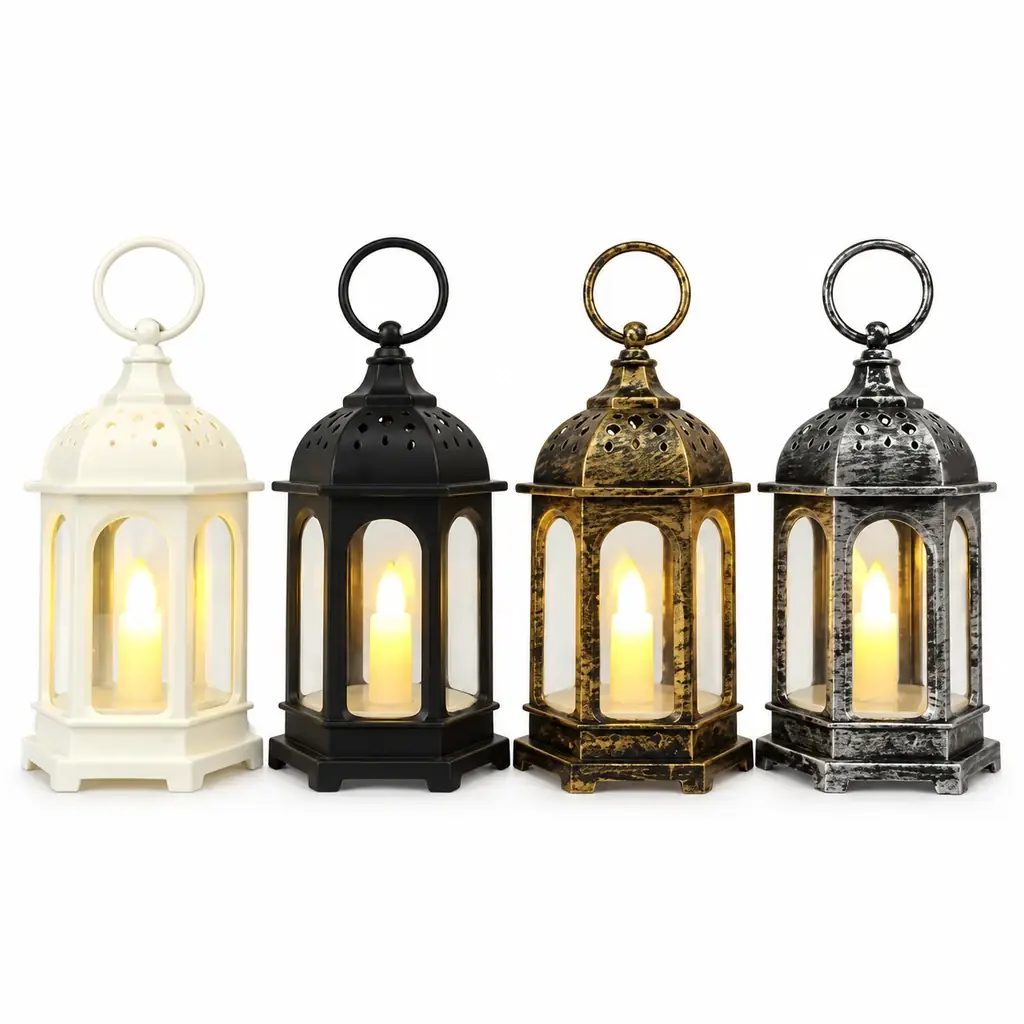
Compare the lantern's overall height and base width with the shelf or table it will occupy. A narrow tall form creates a different display from a wide hexagonal or round design.
Kerosene-style describes a familiar decorative outline. The products in that collection use an LED light source; they are not fuel-burning lamps. Review the finish and handle details on the selected image and sample.
Look at the light through the housing
Openwork, clear panels and decorative finishes affect how the LED light is seen. A moving-flame model differs from a fixed light effect even where the housing is similar.
Compare lit samples in the intended setting. Check the controls, battery access and any required hanging arrangement for the exact model. A handle shown in a photograph should not be treated as a verified mounting specification.
Separate indoor and exterior requirements
Tell the supplier where the lantern will be placed. Outdoor suitability requires confirmation for the exact model, including the relevant protection details and operating conditions.
If solar operation is required, identify the solar reference and ask about charging conditions. Keep that specification distinct from conventional battery-powered decorative lanterns.
Plan protective and retail packing
Consider the shape, projecting parts and panel details when reviewing packing. A retail gift box and an export carton serve different purposes; both should be discussed.
For a wholesale enquiry, provide the reference, finish, quantity, pack format and destination. Include any seasonal artwork or brand requirements with the same brief.
Build the assortment before choosing single pieces
A lantern range sells as a set, not as single pieces, so the assortment should be planned before any single model is chosen. Start from the display the buyer is building: a heritage shelf needs the kerosene-style outline — seven models in that collection — while a modern retail wall needs geometric housings and clean lines, and a seasonal programme needs the themed lines inside the 84-model lanterns and specialty collection, which covers Ramadan, Halloween, religious and solar lines alongside the main range.
Plan the assortment in three layers. The core layer is the year-round range: two or three silhouettes in two or three finishes, in the sizes that fit the buyer’s shelf or table. The second layer is the seasonal layer: the themed models that rotate through the year, ordered ahead of the season they serve. The third layer is the statement layer: one larger or more decorative piece per display, used to anchor the shelf and give the range a focal point. A buyer who orders in layers can reorder the core without rethinking the whole range, and can swap the seasonal layer without disturbing the core.
Keep the finish story tight. A narrow tall form creates a different display from a wide hexagonal or round design, and mixing too many finishes on one shelf makes the range look like a clearance table. Choose the finishes against the buyer’s existing range — warm metallics with warm light, dark finishes where the light should stand out — and record the finish per model in the enquiry, so the bulk order arrives as the assortment that was approved.
Power and runtime by lantern type
Lanterns in this catalogue run on different power systems, and the buying brief should name the system per model rather than assuming one system for the whole range. Larger lantern bodies commonly run on three AA cells, compact mini lanterns on a single CR2032 cell, and solar lanterns from a built-in rechargeable cell charged by daylight. Each system has its own runtime logic: the CR2032 segment sits in a 150 to 200-plus hour framework, AA-powered models in a 200 to 500 hour framework with moving-flame models around 200 hours, and solar models at about 8 to 12 hours of light per full charge after about 5 to 10 hours of sun.
Wide pillars and larger lantern bodies on three AA cells have no independent published runtime for that segment, so their runtime must be established by a sample trial for the exact model — do not extend the two-cell framework to a three-cell model by arithmetic. And for any solar reference, confirm whether it runs from a built-in rechargeable cell or from replaceable cells, because the charging routine and the spares shelf change with that answer.
The sample trial is the same as for any outdoor or display candle: run the lit sample through a full evening in the intended setting, record when it dims, and use that result — not a catalogue line — to set the battery rota and the spares holding for that model.
A retail display checklist
A lantern is bought twice: once as a product, and once as a display piece. The display checklist covers the second purchase. First, the shelf or table: compare the lantern’s overall height and base width with the space it will occupy, and leave room around it — a lantern crowded by neighbours loses the silhouette that sells it. Second, the light: compare lit samples in the intended setting, because openwork, clear panels and decorative finishes change how the LED light is seen, and a moving-flame model reads differently from a fixed light effect even where the housing is similar.
Third, the controls and the power: check the switch, the battery access and any remote on the sample, and confirm that staff can reach them without dismantling the display. Fourth, hanging: if a lantern is to hang, the hanging arrangement must be verified on the sample for the exact model — a handle shown in a photograph should not be treated as a verified mounting specification. Record the verified arrangement in the order, with the weight and fixing the buyer will use.
Fifth, the pack: consider the shape, projecting parts and panel details when reviewing packing, because a retail gift box and an export carton serve different purposes and both should be discussed before the order is placed. A lantern with a projecting handle or an openwork panel needs protective packing that a plain pillar does not.
Seasonal and gift planning
Lanterns are a seasonal business, and the buying calendar should be set by the season, not by the order date. Ramadan and religious displays, Halloween programmes and festive collections each have their own selling window, and the themed models inside the specialty collection are built for those windows. Order the seasonal layer early enough for the sample trial, the production window — typical full-container production takes about 20 days after the order details are confirmed — and freight, so the range lands before the season opens rather than during it.
Gift planning follows the same calendar. The gift-sets range — tealight, pillar and lantern sets in presentation boxes — suits retail gifting and hotel gifting alike, and custom message cards are available as part of the private-label service. A gift set ordered with the seasonal range, in the same finishes and the same presentation, reads as one programme rather than two separate purchases.
Record the seasonal plan with the order: which models serve which season, the quantities per season, and the reorder point for the core range. The next season then starts from a plan instead of a blank page.
Decorative lantern questions, answered
Are kerosene-style lanterns fuel-burning lamps?
No. Kerosene-style describes a familiar decorative outline. The products in that collection use an LED light source; they are not fuel-burning lamps.
What powers a decorative lantern?
It depends on the model: larger lantern bodies commonly run on three AA cells, compact minis on a single CR2032 cell, and solar lanterns from a built-in rechargeable cell. Confirm the power system and runtime for the exact reference before ordering.
Can lanterns be hung on display?
Only where the hanging arrangement has been verified on the sample for the exact model. A handle shown in a photograph is not a verified mounting specification — confirm it with the supplier and record it in the order.
Continue your product selection
Compare the relevant models and keep their references with your buying brief.
Wholesale LED Candles for Home Décor Retail ↗