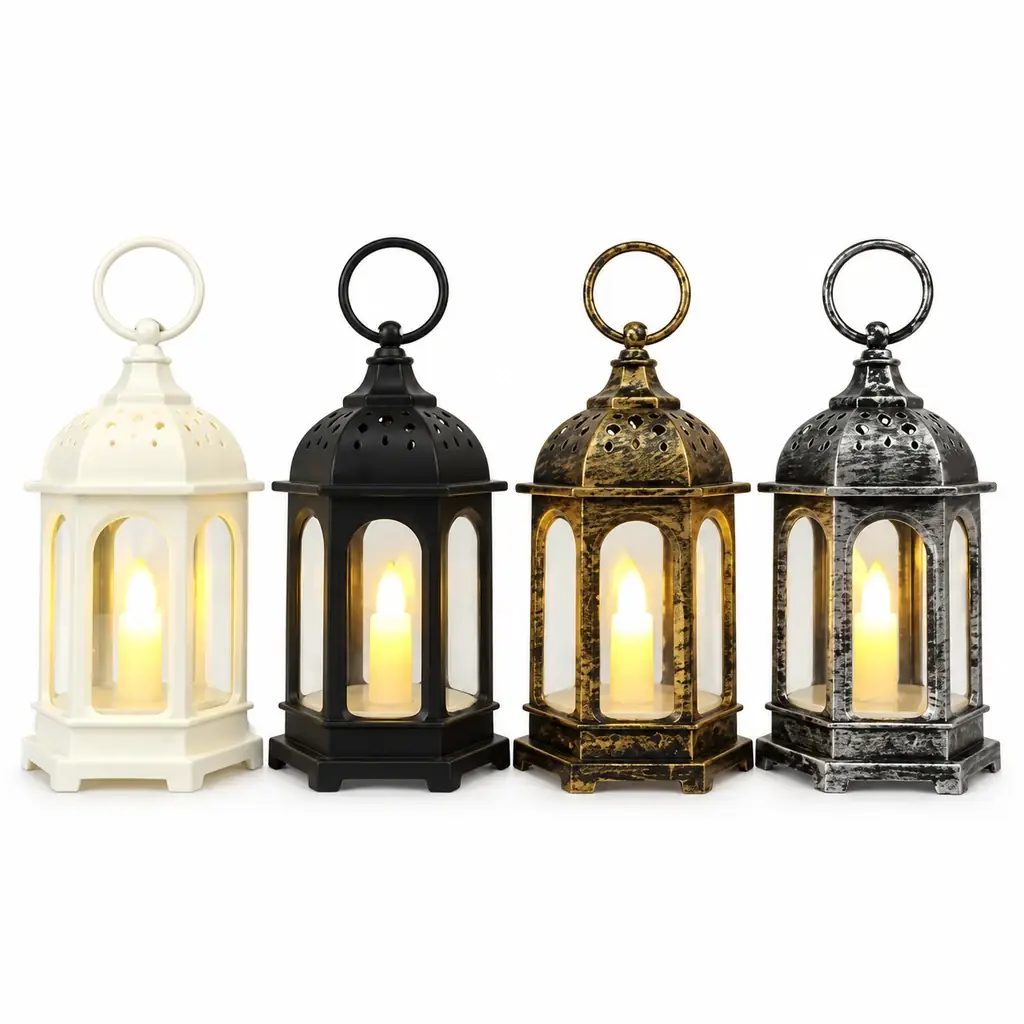
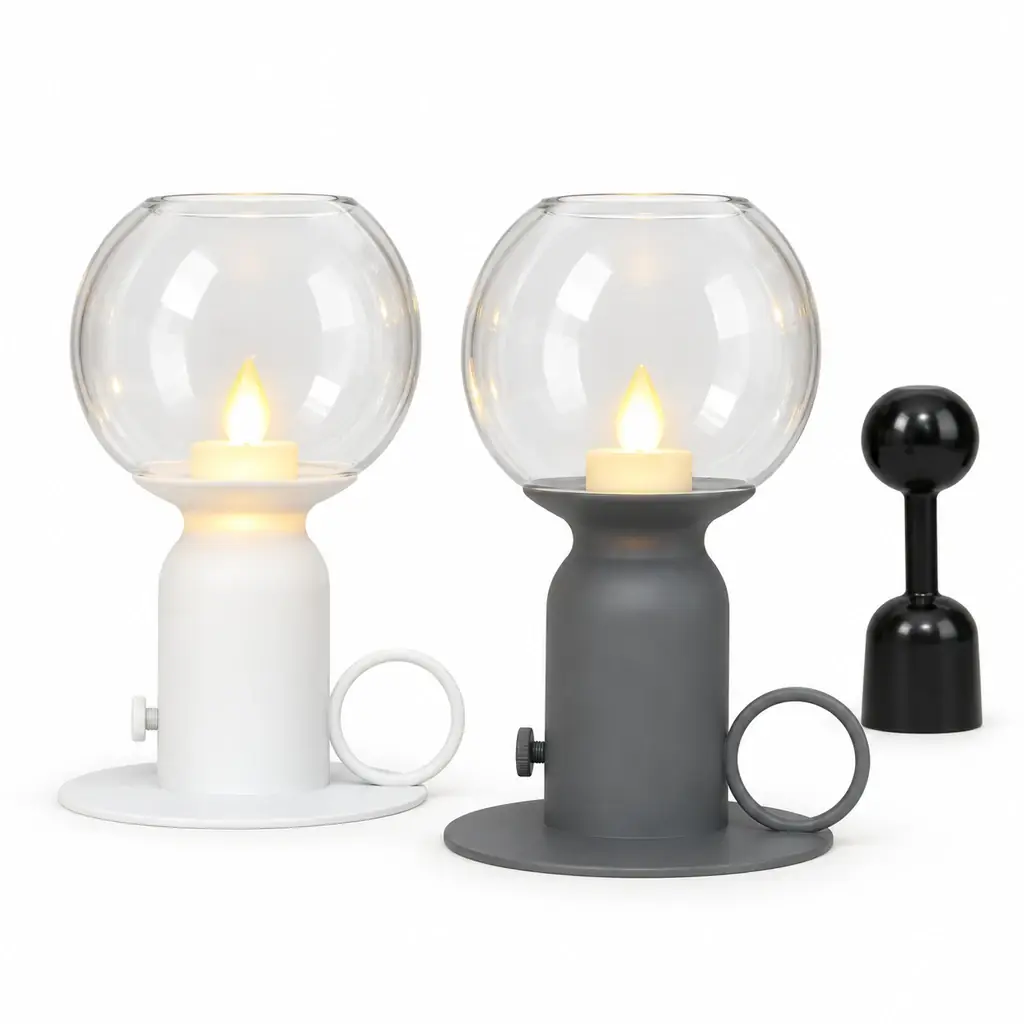
Describe the actual placement
State whether the display will be inside, under a covered entrance or fully exposed. Include the expected rain exposure and whether the products will be brought in between uses.
Ask for the protection rating and permitted use conditions for the selected reference. A catalogue label such as waterproof is not a substitute for the detailed operating information required for the project.
Review solar charging conditions
Identify where the panel will receive light and ask for the charging conditions used in the product information. A shaded location and a well-lit position should not be treated as equivalent.
Request runtime information with the relevant charging conditions and operating cycle. Avoid applying one runtime estimate to every solar candle or lantern in the range.
Check controls, storage and care
Review the switch, battery access and handling instructions on a sample. Ask what storage and care the model needs when it is not in use.
If a conventional battery-powered model is also being considered, record its requirements separately. A similar outer shape does not establish the same power or exposure specification.
Keep the approved specification with the order
Retain the reference, rating information, power details and sample approval record. Packaging claims should match that specification.
Send the placement description and required quantity with the enquiry. It allows the product discussion to focus on the conditions that matter to the intended display.
Match the runtime to the night, not the catalogue line
A solar candle and a battery candle answer different questions, and their runtimes must never be swapped. A solar model gives light per charge — as a cross-checked framework, a full charge delivers about 8 to 12 hours of light in one night, after about 5 to 10 hours of sun — so the question for a solar display is whether the panel saw enough light that day, not how many nights the unit can run. A battery model gives light per set of cells: tealights on CR2032 cells sit in a 150 to 200-plus hour framework, AA-powered pillars in a 200 to 500 hour framework, and taper candles on two AAA cells in a 150 to 250 hour framework.
Apply each framework only to its own segment, and confirm the runtime for the exact reference on a sample trial. A moving-flame model draws more power than a static flickering model in the same battery segment, so a moving-flame pillar should be planned around the lower end of its segment — about 200 hours for AA-powered pillars — rather than the top of the range. For solar references, confirm for the exact model whether it runs from a built-in rechargeable cell or from replaceable cells, because the charging routine, the storage routine and the spares shelf all change with that answer.
The practical test is one full night in the real position: place the sample where the display will stand, run it through the evening it must cover, and record when it dims. That single trial settles the runtime question for that model in that position more reliably than any catalogue line, and it should be repeated for each model in the order, not assumed from one model to the next.
A placement checklist for each display
Write one line per display before ordering, and the enquiry practically writes itself. For a terrace or poolside display, record the rain exposure, whether the units will be brought in between uses, and the surface they stand on. For a covered entrance, record how much direct light the solar panel actually receives during the day — a shaded entrance and a sunlit one are different charging conditions, even on the same building.
For a garden path or event lawn, record the ground conditions and whether the units sit in holders, on stakes or directly on the ground, and how they will be collected after the event. For a balcony or rooftop display, record the wind exposure and whether the units need extra weight or a holder to stay put. In every case, add the expected hours of light per night and the number of consecutive nights the display must run without attention — those two figures decide whether the order needs solar models, battery models, or a mix of both.
Keep the checklist with the order record, next to the approved specification. When a display is repeated next season, the same sheet tells the buyer exactly which references worked, in which positions, and what to reorder — instead of starting the selection from scratch.
Spares, storage and seasonal rotation
Outdoor displays fail in storage more often than in service. A unit left switched on in a store drains its cells; a solar unit left in a dark cupboard arrives at the next event uncharged; a battery left in a damp store can leak and damage the contacts. The routine is simple: switch units off before storage, remove replaceable cells where the model allows, store solar units where their panels can still see light or recharge them before the next use, and keep the store dry.
Hold spares by the same logic as the placement checklist. Keep spare cells for each battery type the order uses, a small number of spare units for each reference, and spare remotes where remote-controlled models are in use. Size the spares shelf from the fleet size and the confirmed runtime — a seasonal display that runs for weeks needs a deeper shelf than a single-evening event.
Seasonal rotation deserves its own line in the buying plan. Outdoor and solar displays are often bought for a season — summer terraces, festive gardens, event lawns — and then stored until the next one. Order the season’s fleet early enough for the sample trial and the production window, and record the storage routine with the order so the next season starts with charged, tested units rather than a box of unknowns.
Keep the light consistent across a set
A row of outdoor candles that do not match reads as a fault, even when every unit is working. Order by exact model reference, approve the lit sample before the bulk order, and compare lit samples side by side in the intended setting — a terrace at dusk, not a brightly lit showroom — so the light colour and brightness of the batch can be judged as guests will see it.
Where a display mixes solar and battery models, keep the two groups visually separate or matched deliberately: a solar unit and a battery unit of the same shape can still differ in light output, and a mixed row should be checked lit, together, before it goes on display. The same rule applies to repeat orders — name the same references, so the new batch matches the batch already in service.
Solar and outdoor candle questions, answered
How long will a solar candle light each night?
As a cross-checked framework, a full charge gives about 8 to 12 hours of light in one night, after about 5 to 10 hours of sun to charge. The actual result depends on the light the panel received that day, so confirm the charging conditions and runtime for the exact reference.
Can the same model be used indoors and outdoors?
Only where the exact model is confirmed for that use. State the placement — inside, under a covered entrance or fully exposed — and ask for the protection rating and permitted use conditions for the selected reference before ordering.
Are batteries included?
No. Batteries are not included with any product, and the type and number depend on the model. For solar references, confirm whether the unit runs from a built-in rechargeable cell or from replaceable cells for that exact model.
Continue your product selection
Compare the relevant models and keep their references with your buying brief.
Solar & Water-Resistant LED Candles ↗